One of the most common analytics problems in growing businesses is not a lack of data. It is a lack of decision-grade data. The team can see traffic numbers, ad clicks, and campaign spend, but still cannot answer a simple leadership question: which activities are actually driving revenue?
That gap usually appears because the measurement stack was built around what platforms expose easily, not around what the business actually needs to know. Google Analytics 4 can help, but only if the event structure, key events, attribution setup, and downstream sales linkage are designed properly.
If the reporting layer cannot connect effort to business outcome, the company ends up optimising visibility instead of revenue.
Why easy metrics become dangerous
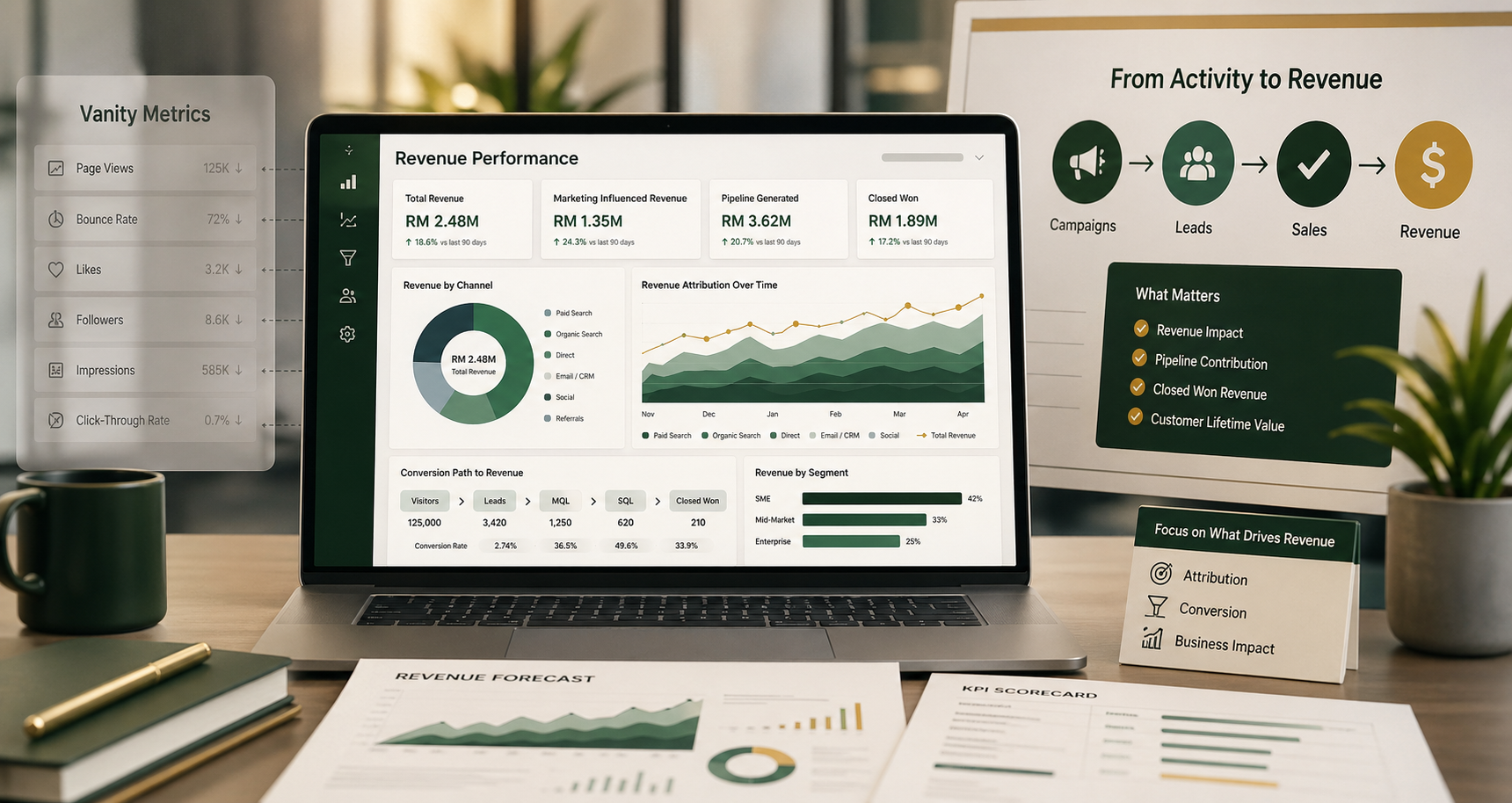
Vanity metrics are not useless because they are false. They are dangerous because they are incomplete. Pageviews can rise while lead quality falls. Clicks can improve while sales revenue stays flat. Sessions can look healthy while the actual purchase or enquiry path is broken.
This is why management teams often feel frustrated by dashboards. The reports look active, but the numbers do not explain commercial performance. That usually means the measurement design is activity-based rather than revenue-based.
What revenue measurement should actually connect
A stronger measurement structure usually needs to connect four layers:
-
1Source activity. Channels, campaigns, landing pages, and traffic sources.
-
2User actions. Key events such as enquiries, checkout steps, calls, bookings, or form submissions.
-
3Sales progression. Whether those actions became qualified leads, opportunities, or purchase events.
-
4Revenue outcome. Whether the effort produced actual commercial value, not just engagement.
If one of those layers is missing, attribution becomes weaker and the reporting starts to drift away from what the business actually cares about.
Why GA4 is only part of the answer
GA4 is useful because it measures user behaviour through events and can support key-event and attribution analysis. Google’s own documentation emphasizes the role of key events and attribution reporting in understanding what actions matter. But GA4 still only sees part of the commercial journey unless you connect it to what happens after the click or form fill.
For ecommerce businesses, that usually means stronger purchase and funnel measurement. For lead-generation businesses, it often means that a `generate_lead` event is only the beginning. The real question is whether that lead became pipeline or revenue.
What to fix first if you want revenue-linked reporting
1. Define the real revenue actions
Before building dashboards, decide what actually matters commercially. That may be completed purchases, qualified leads, booked demos, signed deals, deposits paid, or recurring revenue. If the business has not defined the real conversion milestones, the analytics layer will default to easier but weaker signals.
2. Mark the right key events
Google Analytics 4 makes a clear distinction between general events and key events. Too many businesses either mark the wrong events or treat every event as equally important. Revenue reporting gets better when the key events reflect real commercial value rather than surface interaction.
3. Review attribution, not just last-click outcomes
Google provides different attribution models because the customer journey is often multi-touch. If your reporting only looks at last-click or shallow source labels, you may over-credit the channel that finished the journey and under-credit the ones that created demand earlier.
This matters especially for longer sales cycles, higher-consideration purchases, and lead-generation journeys where the first interaction and the final conversion may happen days or weeks apart.
4. Connect online leads to offline outcomes
One of the biggest blind spots in revenue analytics is what happens after a lead form is submitted. A campaign may generate many enquiries, but if those enquiries do not become qualified pipeline or closed revenue, the marketing picture is incomplete.
Google Ads supports offline conversion import, which helps connect later sales outcomes back to the original acquisition path. That is often where “easy metrics” start becoming real business metrics.
5. Separate lead volume from lead quality
More leads do not automatically mean more revenue. A stronger analytics setup should distinguish between raw enquiry volume and commercially useful outcomes. That may mean adding CRM stages, qualification labels, or value-based status fields to the reporting model.
If the business keeps celebrating the top of funnel while the bottom of funnel stays weak, it is usually measuring activity better than value.
What a better revenue dashboard should show
A CFO-friendly or leadership-friendly reporting layer should not just answer “how much traffic did we get?” It should help answer questions such as:
- Which channels generate the strongest qualified leads?
- Which campaigns drive revenue, not just enquiries?
- Where does the conversion journey drop off most often?
- Which pages or offers influence the highest-value outcomes?
- How does marketing-sourced pipeline compare with closed revenue?
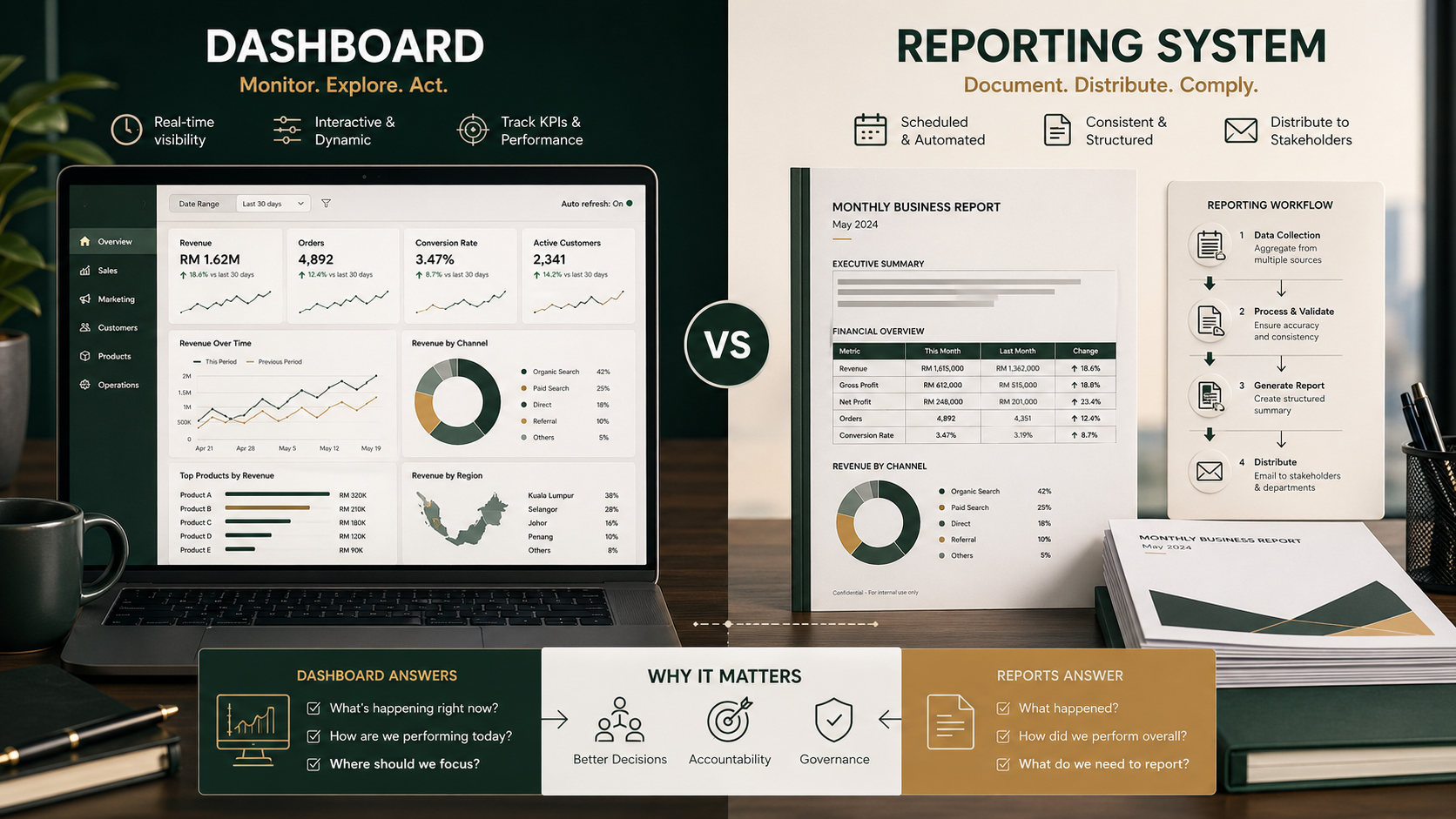
That is a different reporting design problem from simply visualising traffic data. It often overlaps with the distinction explained in our article on dashboards versus reporting systems.
What Malaysian businesses should watch for
Many local businesses have hybrid commercial journeys. The website may generate the lead, but the real sale happens through sales calls, WhatsApp follow-up, showroom visits, or manual commercial discussions. That makes revenue attribution harder, but also more important.
If your reporting only measures the digital touchpoint and ignores what happens in CRM or sales ops afterward, the business may end up overspending on channels that look productive but are not truly profitable.
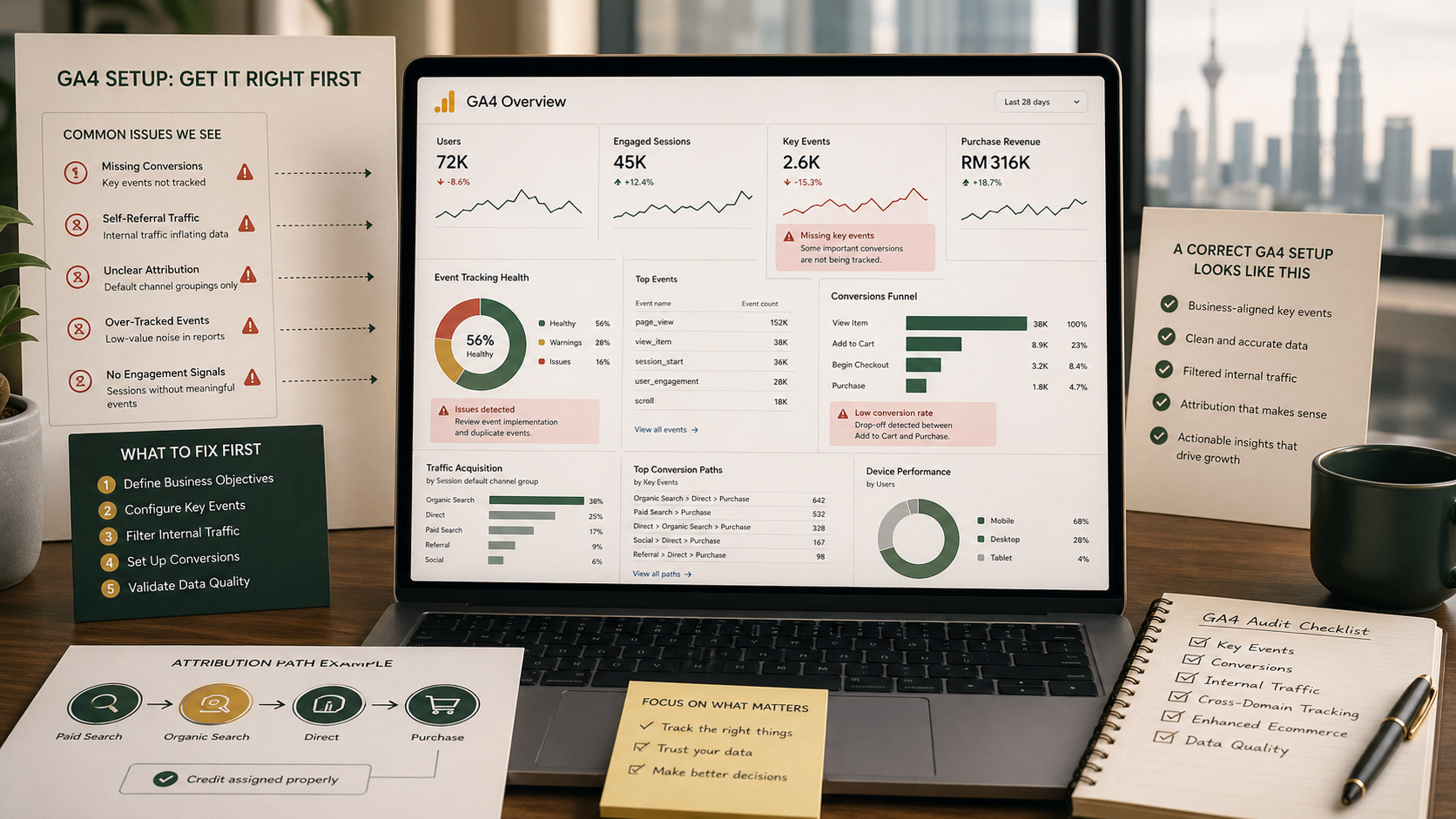
This is also why stronger GA4 setup matters. If the analytics foundation is weak, the revenue view will be weak too. That connection is covered in more detail in our article on why businesses use GA4 wrong.
The real goal
The goal is not to stop tracking top-of-funnel metrics. It is to stop mistaking them for business success. Good measurement helps a company understand what creates revenue, not just what creates motion. Once that shift happens, dashboards become more useful, channel decisions become clearer, and finance has a better reason to trust what marketing is reporting.
This article provides general information only and should not be treated as legal, technical, or financial advice. The right revenue-measurement approach depends on the business model, sales cycle, CRM maturity, and attribution requirements involved.