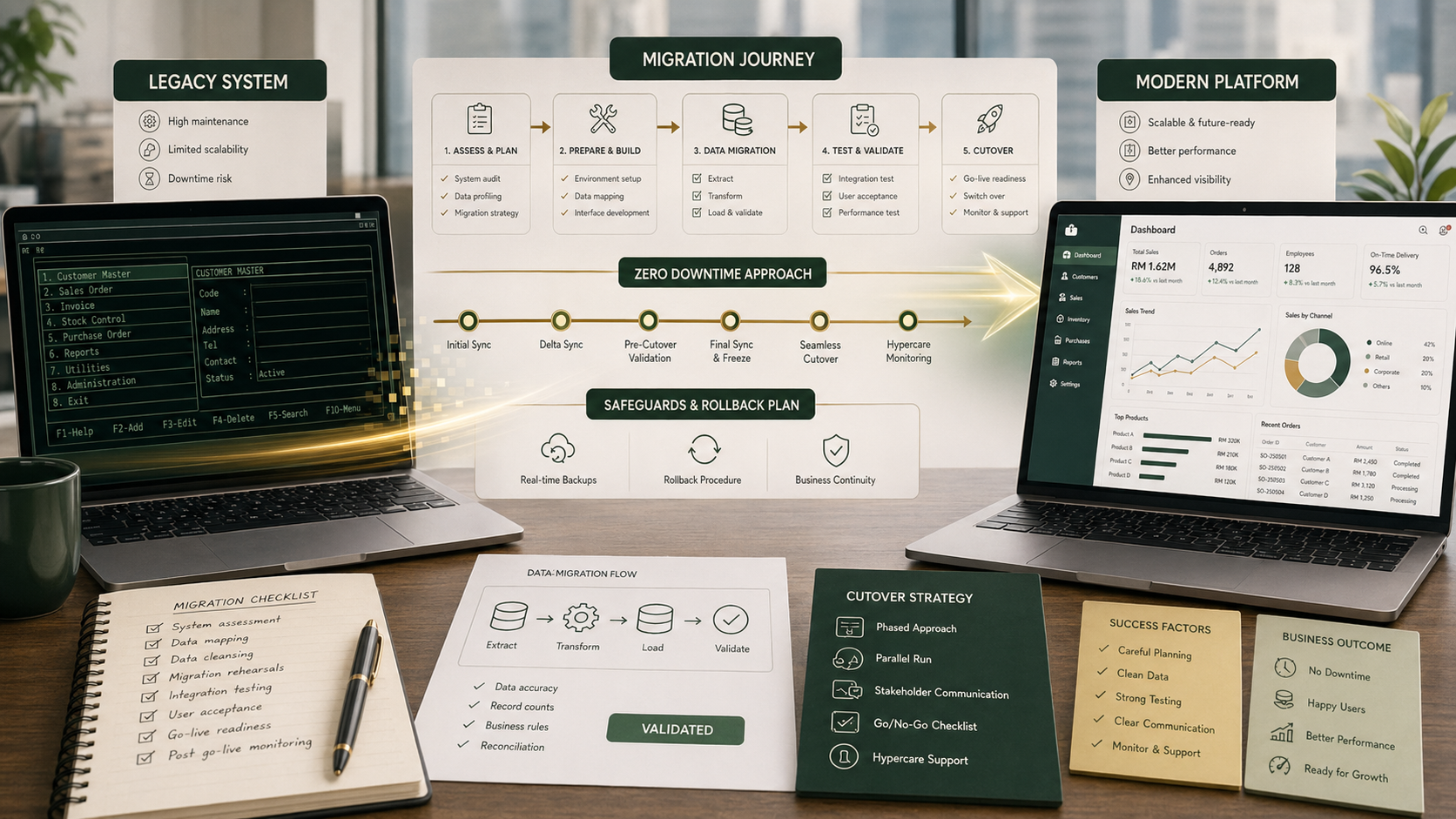

Most digital transformation conversations start with systems, features, or automation. That is understandable. Technology is the visible part. But experts from IBM, Prosci, and McKinsey all converge on the same practical truth: digital transformation is as much about people, behaviour, and change management as it is about technology itself.
IBM describes digital transformation as a business strategy initiative and notes that it is as much about business transformation and change management as modernising IT. IBM’s change management guidance also emphasises a modern digital approach that is personalized, amplified, and measured. Prosci goes even further and says the missing link in many transformations is structured support for the people being asked to change.
If the system changes but the behaviour does not, the business has completed a rollout, not a transformation.
Why digital transformation often fails after go-live
Many projects are declared successful the moment the platform launches. The system is live. The vendor has delivered. The milestone is ticked off. But that is exactly where the human side begins to matter more, not less.
Common post-launch problems usually have very little to do with the code itself:
- Users revert to spreadsheets, WhatsApp, or side-channel workarounds
- Managers bypass the new workflow because it feels slower or unfamiliar
- Staff are trained on buttons but not on the reason the process changed
- Teams comply temporarily but never fully adopt the new operating model
- Leadership assumes people will naturally switch because the new system is “better”
Those are not technology failures. They are change management failures.
What change management actually means in a transformation project
Change management in digital transformation is not just sending one announcement email and scheduling a training session. It is the structured work of helping people understand why the change is happening, what is changing in their day-to-day work, what new capabilities they need, and how the organisation will reinforce the new behaviour after go-live.
Prosci’s ADKAR framing is useful here because it breaks individual change into awareness, desire, knowledge, ability, and reinforcement. In plain business language, people need to know what is changing, why it matters, how to work differently, and what support exists while they adapt.
Why people resist even when the system is objectively better
People do not resist only because they dislike technology. They resist because the new process changes comfort, rhythm, visibility, or accountability. A new system may remove manual work, but it may also remove informal control. It may standardise approvals, expose delays, or make performance more visible. That changes behaviour and power dynamics, not just screens.
That is why user adoption in digital transformation cannot be treated as a minor training issue. It is part of the operational design. McKinsey’s work on digital transformation success consistently points to stronger involvement from leaders and transformation-specific roles as a major factor in better outcomes.
What strong change management looks like
A stronger people-side approach usually includes these elements before and after rollout:
-
1Clear leadership sponsorship. People need visible signals from leadership that the change matters and will stick.
-
2Role-based communication. Different user groups need different explanations, not one generic launch message.
-
3Practical training. Users need scenario-based guidance tied to their real work, not just feature walkthroughs.
-
4Manager reinforcement. Direct supervisors are often the real drivers of whether new habits take hold.
-
5Feedback loops after go-live. Teams need a fast way to raise friction, clarify confusion, and improve the rollout.
-
6Adoption measurement. The business should track real usage behaviour, not just completion of deployment milestones.
Why training alone is not enough
One of the biggest misconceptions in change management is that training equals adoption. It does not. Training can explain how the new system works, but it does not automatically create confidence, motivation, or behavioural consistency.
IBM’s change guidance emphasises that modern change needs to be measured and personalized, not handled as a one-size-fits-all event. Some users need process clarity, some need confidence, and some need reassurance that the new way of working will be supported long enough to become normal.
What Malaysian businesses should watch for
In many Malaysian organisations, especially SMEs and multi-branch operations, the people side can be even more delicate because the business has grown through informal workarounds. Knowledge often sits with a few key individuals. Approval logic is partly verbal. Exceptions are handled through messaging apps. A new platform may technically improve control, but it also forces unwritten behaviour into a visible system.
That is why change management often becomes the real project. The challenge is not only implementing software. It is helping the organisation move from a familiar but inconsistent operating style into a more structured one without triggering unnecessary resistance.
MDEC’s recent language around people-centric and inclusive digital transformation reinforces the same direction. Even at the ecosystem level, transformation is increasingly framed as human-centred, not purely technological.
How to improve adoption before rollout
If you want the transformation to stick, start earlier than most teams do. Before go-live, ask:
- Which user groups will feel this change most strongly?
- Who might lose convenience, control, or familiarity?
- What behaviour are we expecting to change, specifically?
- What will managers do if people revert to the old way?
- How will we know adoption is real after week one?
Those are change management questions, but they are also delivery questions. If nobody owns them, the project is exposed.
What success really looks like
Successful digital transformation is often operationally quiet. People stop relying on old side processes. Managers reinforce the new workflow consistently. Teams understand the purpose behind the change. Support is visible during the early friction phase. And the business no longer has to force adoption because the new process has become the normal one.
If you are evaluating a transformation project now, it is worth reading this alongside our article on why many digital transformation projects fail. The technical design matters, but the adoption design matters just as much.
This article provides general information only and should not be treated as legal, technical, or HR advice. Every change management approach should be adapted to the organisation’s structure, leadership, user groups, and delivery risk.