1. Tailored to your unique workflow
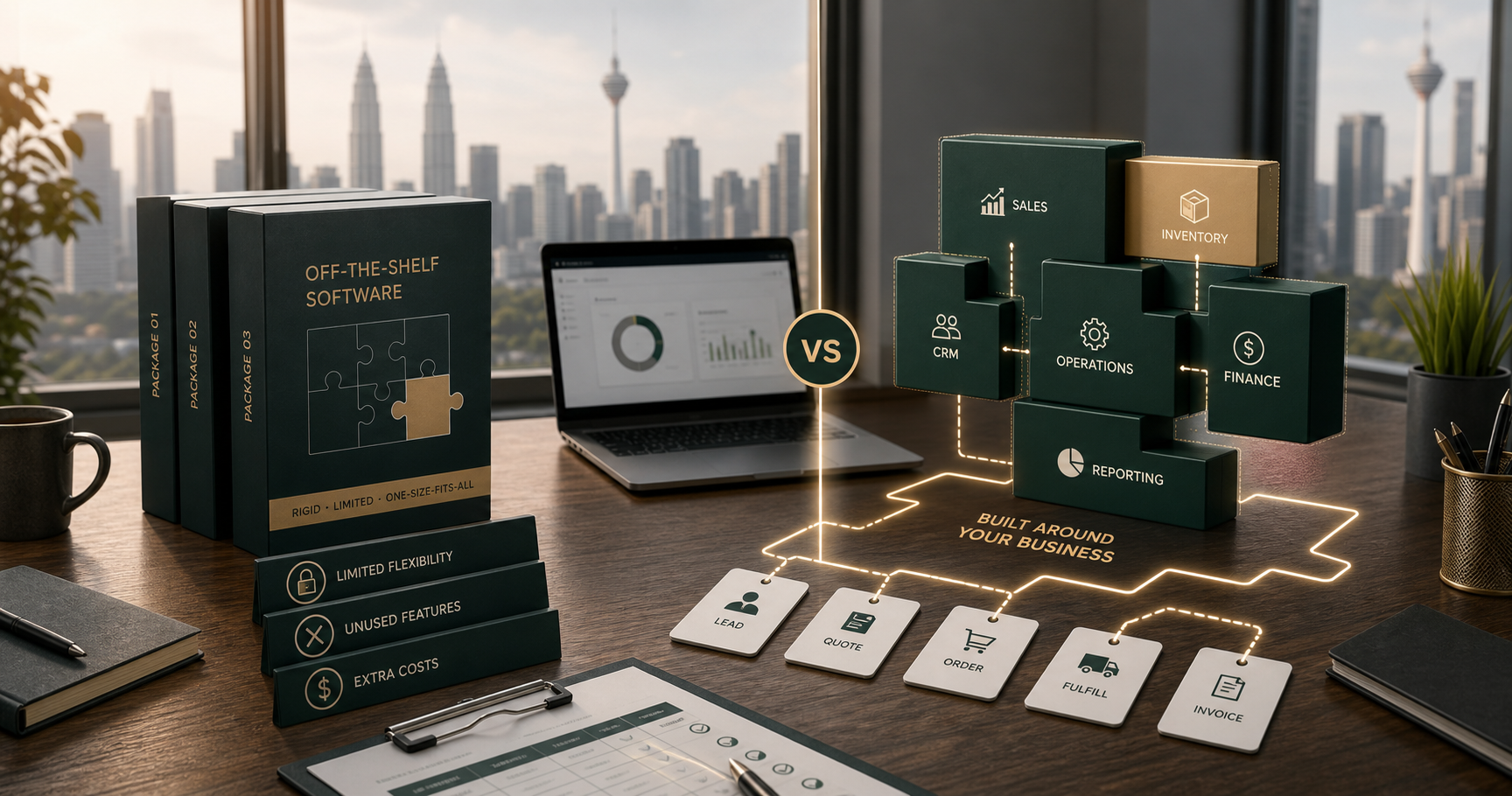
Every business operates differently. A retail chain has almost nothing in common, operationally, with a logistics provider or a professional-services firm. Off-the-shelf software assumes a single "correct" way of working and forces every user into it.
Customised solutions do the opposite. They digitise your processes exactly as they are, improving efficiency and eliminating the manual workarounds teams invent to compensate for software that doesn't fit. When the system mirrors how your people already work, adoption is faster, training is shorter, and errors fall.
2. Scalability for future growth
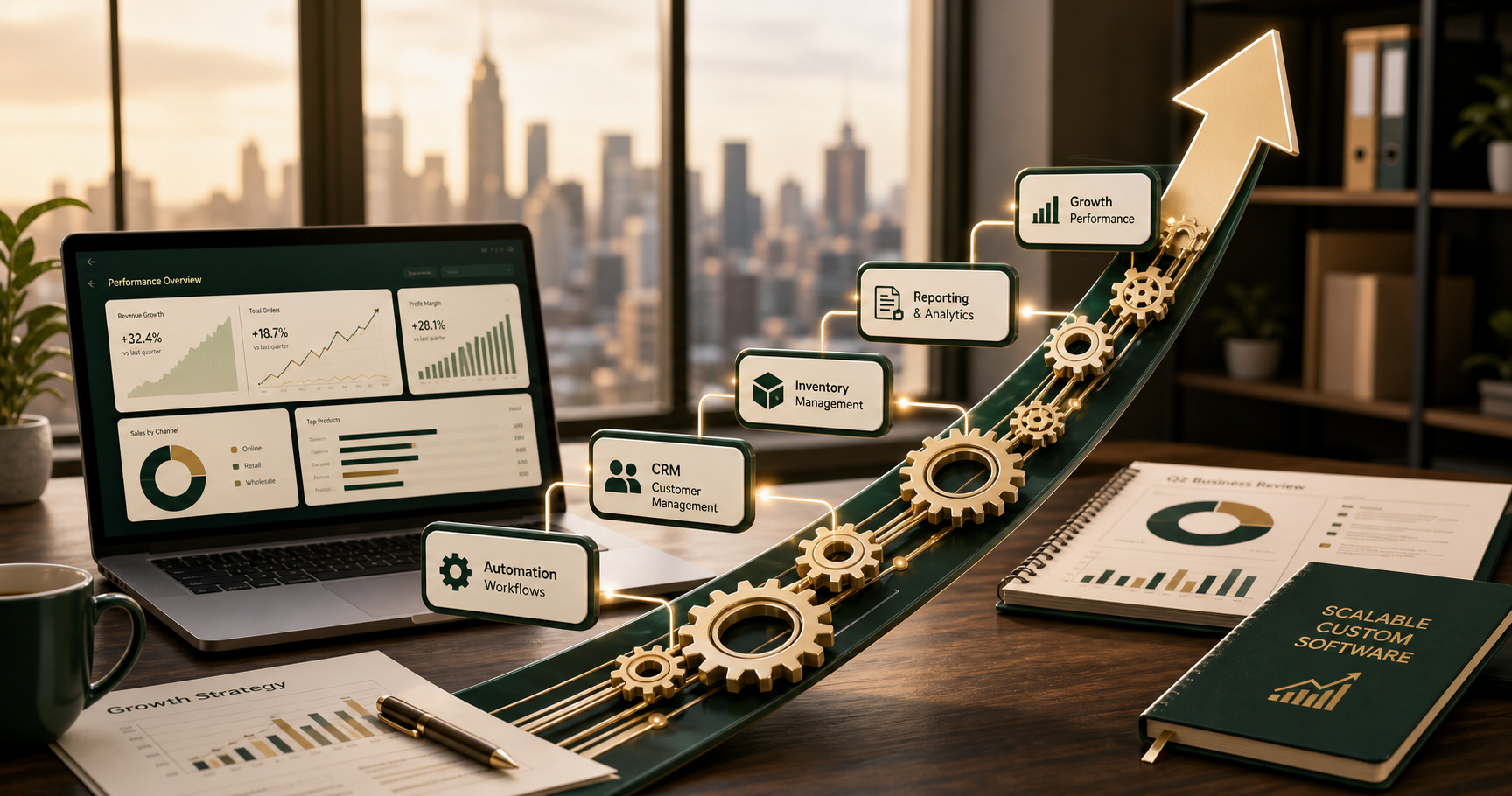
Your systems need to grow with you. A customised platform is designed with scale in mind from day one — whether that means adding users, switching on new modules, opening additional outlets, or integrating emerging technologies as they mature.
This is where generic software quietly fails growing companies. You hit a licence ceiling, a feature wall, or a performance limit, and suddenly the "cheap" solution becomes the thing blocking your expansion. A custom build is a future-proof investment precisely because it is designed around where you are going, not just where you are.
3. A genuine competitive advantage
When you run the same off-the-shelf system as every competitor, you inherit the same limitations as every competitor. Customised software lets you build features around your value proposition — the specific things that make customers choose you.
That edge compounds. A distributor with a purpose-built ordering system serves customers faster than rivals stuck in manual processes. A retailer with a custom loyalty and inventory engine runs promotions competitors cannot match operationally. The software stops being a cost centre and becomes part of your moat.
4. Clean integration with existing systems
Most Malaysian and Singaporean businesses run a mix of legacy and modern tools — an accounting package here, a CRM there, a warehouse system somewhere else. Off-the-shelf software tends to sit awkwardly beside these, forcing double data entry and creating silos.
A custom-built solution is designed to integrate smoothly with what you already run — ERP, CRM, accounting, payment gateways, or e-commerce — so data flows in one continuous stream instead of being re-keyed by hand. That single change often delivers the fastest, most visible efficiency gain of the entire project.
The regional dimension
Two market-specific factors make the case even stronger:
- In Malaysia, incentives such as the Automation Capital Allowance can materially improve the return on a custom software investment, and local payment rails like DuitNow and FPX are best served by systems built to use them natively.
- In Singapore, higher labour costs mean automation pays back faster, while strict PDPA expectations reward businesses that own and control their own systems and data.
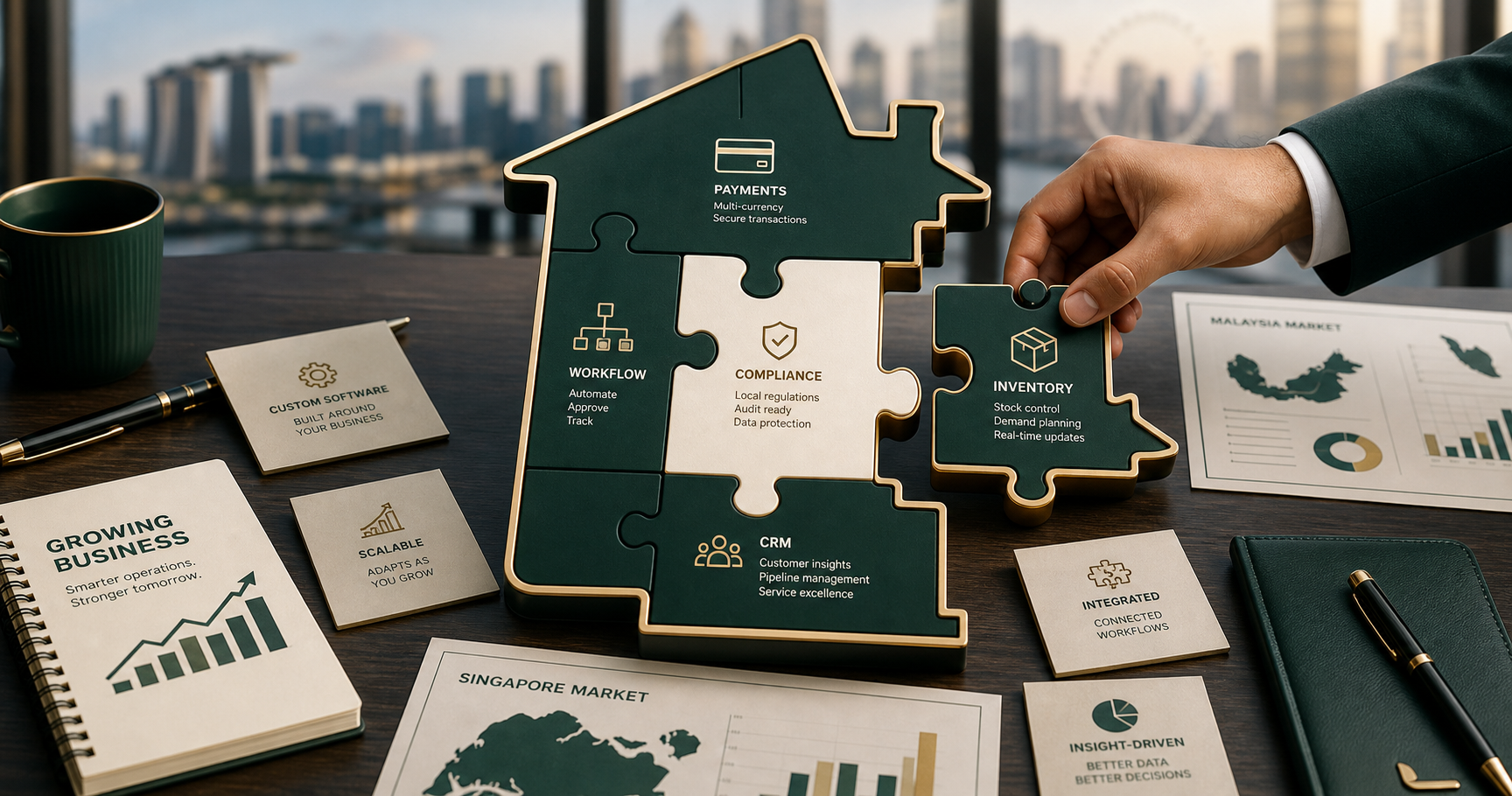
For companies operating across both — as many in this region do — a customised system handles the differences in payments, tax, compliance and currency that a one-size-fits-all product simply ignores.
Custom does not mean complicated
A common fear is that "custom" means expensive, slow and risky. Done properly, it is the opposite. The right partner scopes tightly, builds in stages, and delivers a system you fully own — no per-seat surprises, no vendor lock-in, no data held hostage.
At Trendtive Digital, we build customised software for businesses in Malaysia and Singapore that have outgrown generic tools: systems tailored to your workflow, designed to scale, engineered to integrate, and structured to give you a real competitive edge. If off-the-shelf software is starting to feel like a constraint rather than a solution, that is usually the signal it is time to build for your business, not around it.